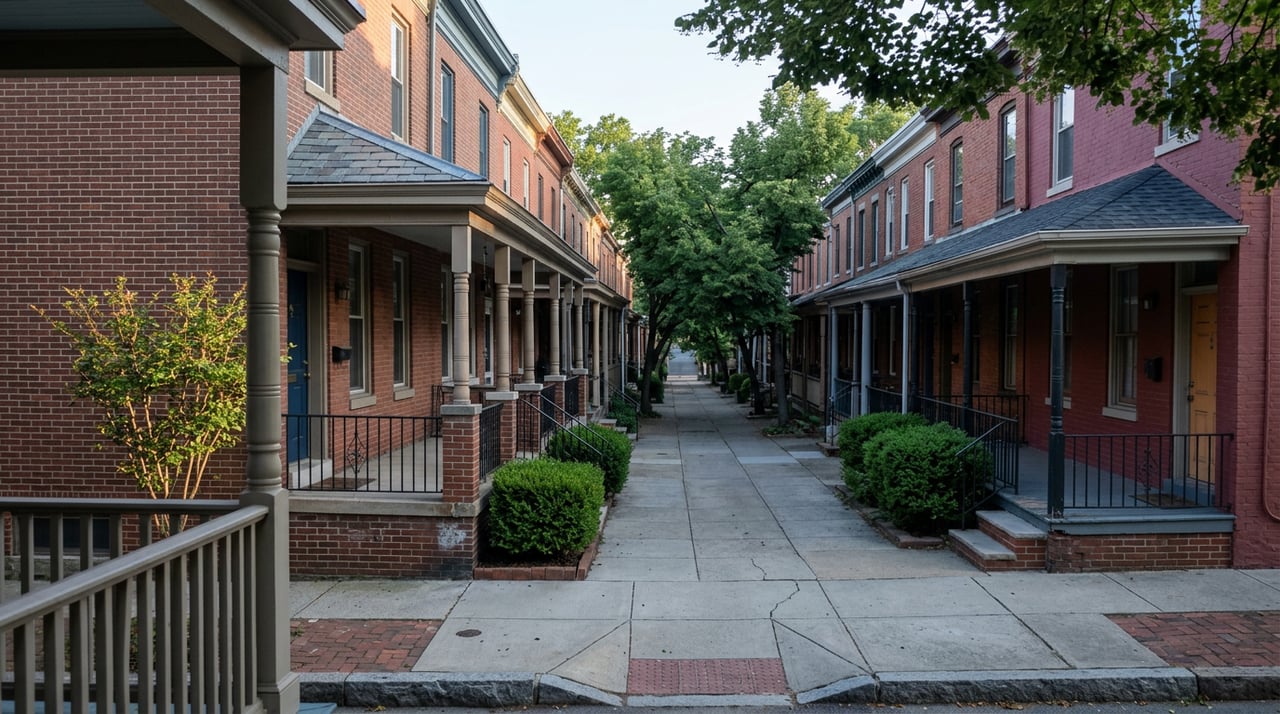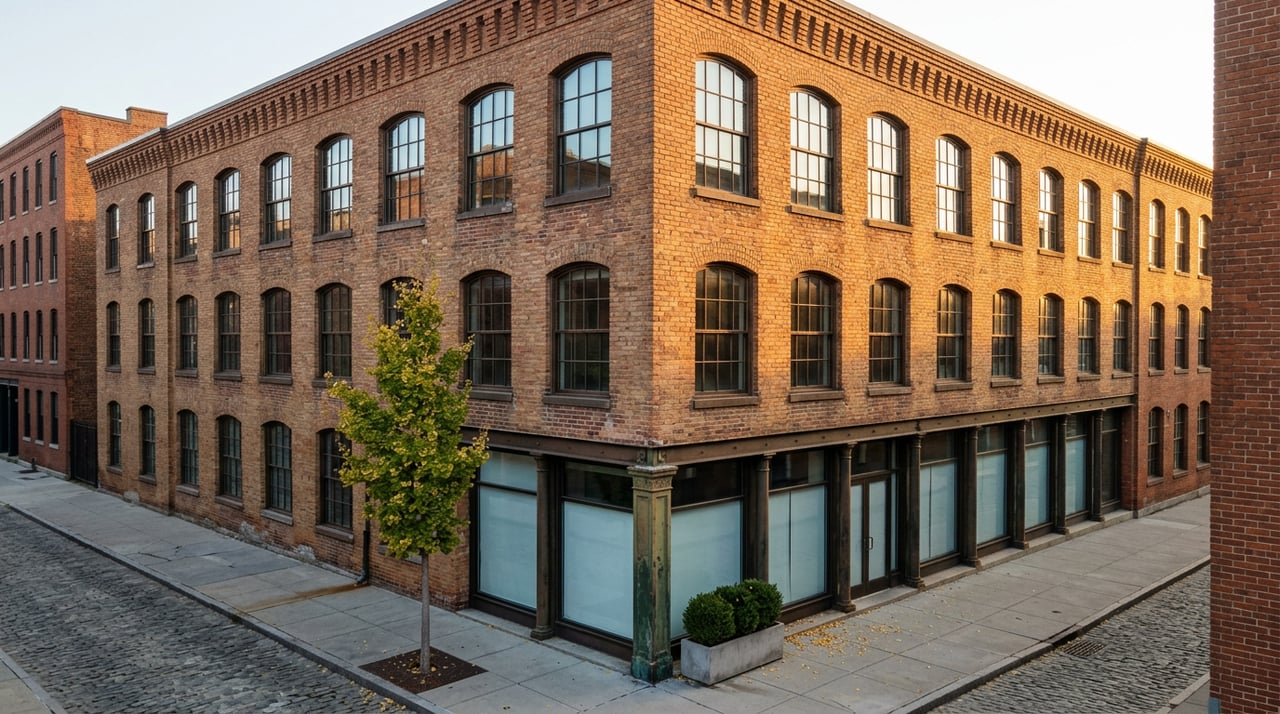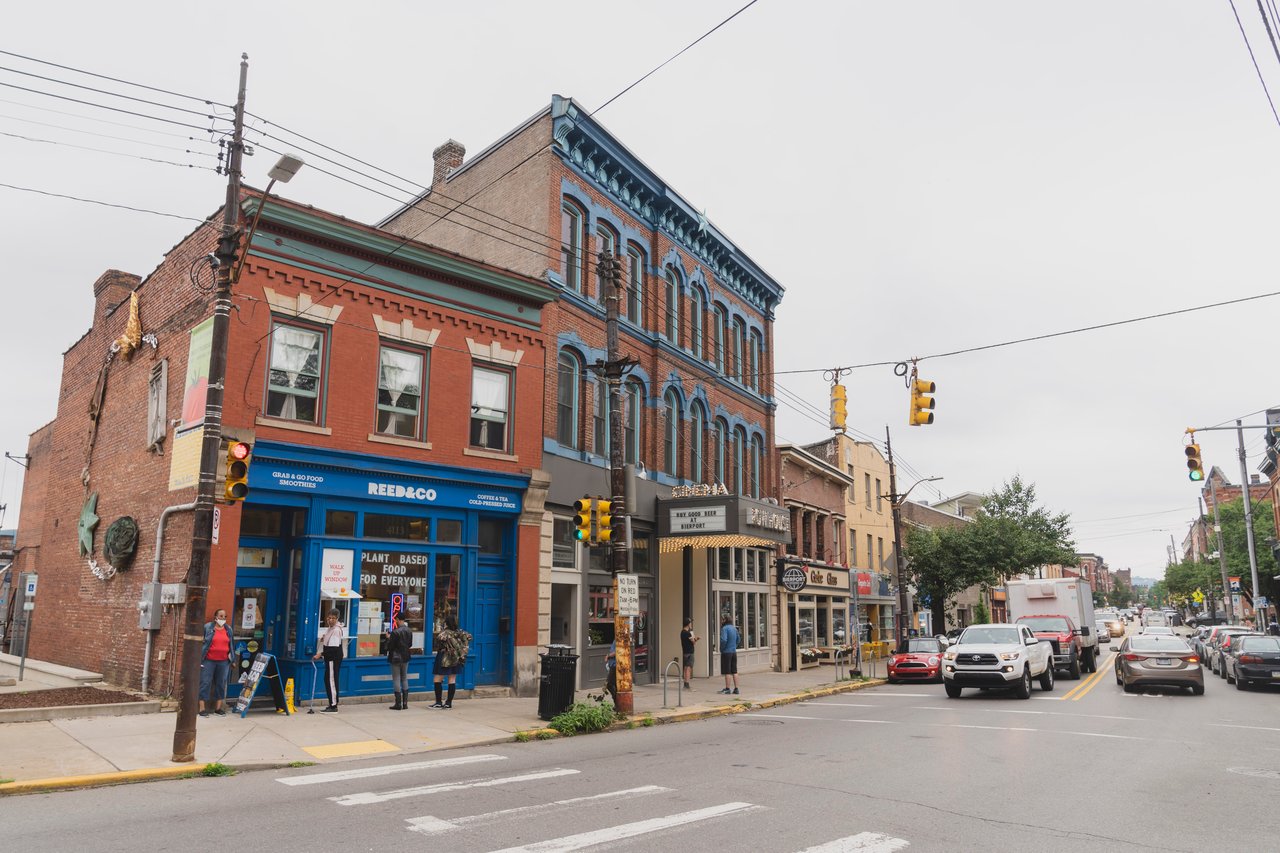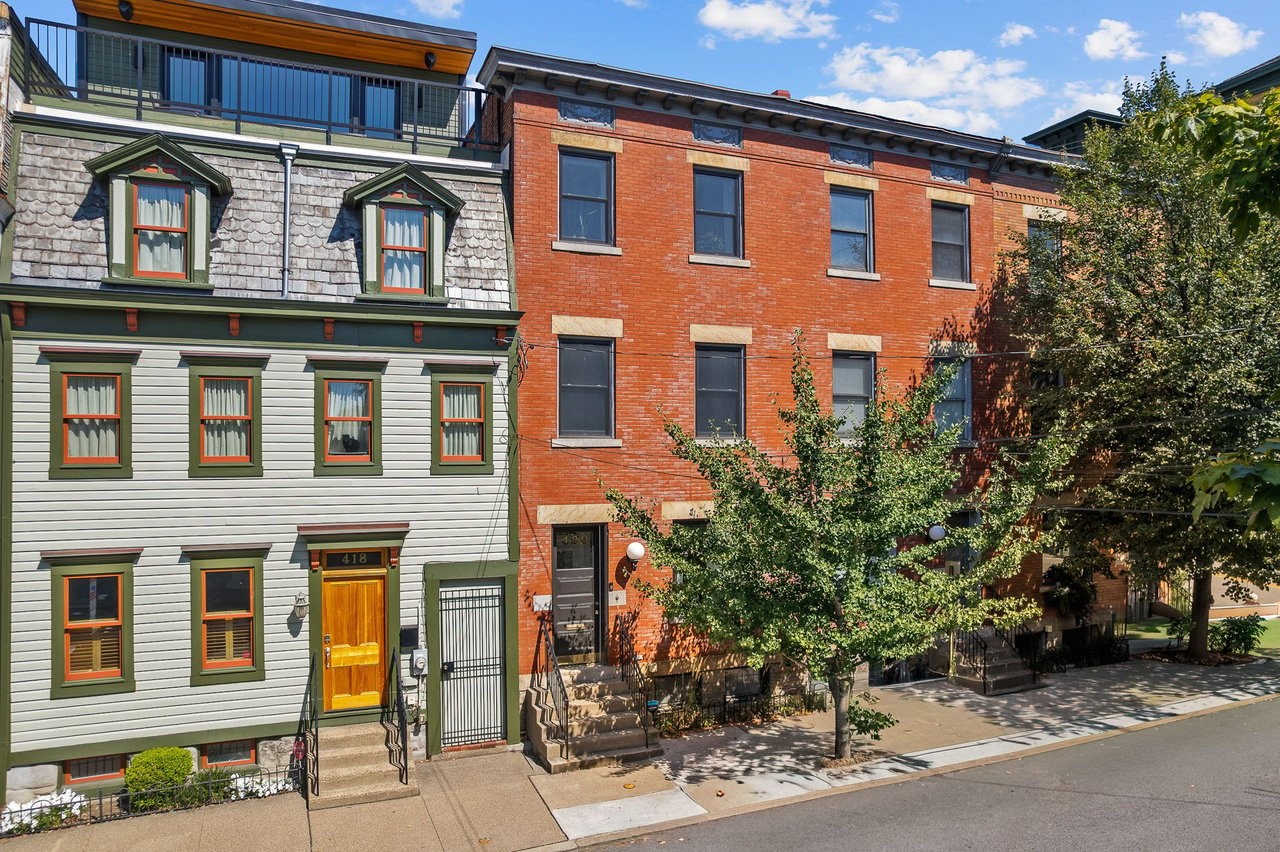
On the third Sunday of September, a folding table goes up in front of Boggs Mansion on West North Avenue, and by late morning there's a line of people holding paper tickets, waiting to be let into other people's houses. This year that Sunday is September 20, and the tour turns 54.
Most people who move to the Mexican War Streets assume the order of operations went something like this: the neighborhood got recognized as historically significant, and then, naturally, people started showing it off. It's the tidy version, the one that fits a place this photogenic. It's also backwards. The Mexican War Streets Society formed in 1969 as a group of neighbors who wanted to keep their block from being torn apart the way urban renewal was tearing apart blocks all over the North Side at the time. The tour followed a few years later, which puts the first one somewhere around 1972 or 1973, meaning residents were already opening their front doors to strangers for a cause before the federal government had ever heard of the Mexican War Streets. The National Register listing didn't come until 1975. The City of Pittsburgh didn't grant its own local historic designation until 1992, twenty-three years after the society formed and roughly two decades after neighbors started the tour that funds their preservation work.
That gap matters if you live here, because it tells you what actually holds this neighborhood together. It isn't a plaque or a review board. It's a volunteer board that still runs four membership meetings a year, elects its own officers every December, and has never needed a government agency's permission to decide that a Sunday in September belongs to house tours.
The paperwork caught up later, twice
The timeline is worth laying out plainly, because it's stranger than the postcard version suggests:
- 1969 — Neighbors organize as the Mexican War Streets Society, a nonprofit built around preservation and community involvement.
- Early 1970s — The House & Garden Tour begins, years before any outside body validates the neighborhood.
- 1975 — The Mexican War Streets Historic District is listed on the National Register of Historic Places, covering 119 buildings across 27 acres.
- 1992 — The City of Pittsburgh finally designates its own local historic district, meaning exterior changes now require Historic Review Commission approval.
- 2008 — The National Register listing expands to include 288 more contributing buildings.
- 2018 — The district expands again, but only after the Allegheny County Court of Common Pleas overturned Pittsburgh City Council's decision to deny that expansion.
Read that last line again. As recently as 2018, protecting more of this neighborhood's housing stock required a judge to overrule the city. The residents wanted the expansion. The council didn't act on it. A court did. If you've ever wondered why the Mexican War Streets Society still spends so much energy on advocacy rather than just throwing parties, that's the answer. The preservation part of the mission has never been settled business, even in a neighborhood that looks, from the sidewalk, like the most secure historic district in the city.
What Sunday actually looks like
None of that history changes the mechanics of the day, so here's what you need if you're going or hosting.
Tickets are $35, sold online only, and the society is explicit that none are sold at the gate on tour day. The quantity is limited and they have sold out in past years, so this isn't a walk-up event you can decide on that morning. Once you've bought a ticket, you pick it up at the welcome booth in front of Boggs Mansion on tour day itself. The tour runs 11 a.m. to 5 p.m. and the society is blunt about their weather policy: it goes on rain or shine, no exceptions, no refunds.
What you're actually touring is a mix of restored private homes and gardens, both public and personal, spread across streets named for battles most visitors have never heard of: Buena Vista, Monterey, Palo Alto, Resaca, Sherman, Taylor. The names come from the Mexican-American War, which is where the neighborhood gets its own name, but on tour day the history lesson takes a back seat to something more immediate: strangers letting you look at their kitchen renovation, their built-in bookshelves, the way they solved a narrow row house's lighting problem. It's not a museum exhibit. It's neighbors deciding that their ordinary Tuesday house is worth an audience for one Sunday.
The blocks between the houses
The tour route threads past the same handful of places that anchor the neighborhood every other week of the year, and if you're new, they're worth knowing before you go.
Commonplace Coffee sits at the corner of Buena Vista and Jacksonia, with overflow seating across the street at Mechanics' Retreat, the small corner garden that neighbors maintain themselves on a volunteer rotation. It's the kind of shop where, according to the people who run it, regulars cross the street to say hello multiple times in a single day. A few blocks over, the Mattress Factory occupies buildings that were largely abandoned before the museum moved in, and it remains one of the few places in the country built entirely around site-specific installation art. Two blocks past that is Randyland, at 1501 Arch Street, artist Randy Gilson's home and yard turned into a free, self-guided outdoor art space that's been evolving since 1995. If Randy's out front, he'll usually stop and talk.
For a pint afterward, Monterey Pub still functions as the neighborhood's other social center, the kind of Irish bar where a weekday afternoon crowd is as normal as a Saturday night one. And if you're walking off a big lunch, Allegheny Commons Park's Lake Elizabeth loop sits just south of the historic district boundary, close enough that it functions as the neighborhood's front yard even though it technically belongs to the whole North Side.
If you've moved in within the last few months, one detail is easy to miss: the society runs a "Be My Neighbor" card program specifically for new residents, offering discounts at businesses like Commonplace Coffee and Happy Day Dessert Factory on Western Avenue for a few months after you settle in. It's a small thing, but it's the kind of small thing that only exists because a neighborhood association still thinks of itself as a welcoming committee first and a preservation board second.
A calendar, not a single event
The house tour is the biggest date on the society's calendar, but it isn't the only one, and that's part of the point. This year's progressive dinner in February carried a Winter Olympics theme and, for the first time, combined guests from both the Mexican War Streets and the neighboring Manchester district before future editions split back into separate neighborhood events. In late April and early May, volunteers spend a weekend on the Lake Elizabeth cleanup in Allegheny Commons Park, an effort that on average pulls five tons of muck out of the lake, mulches 350 trees, and raises more than $6,500 in a single weekend. In June, the annual yard sale turns the whole neighborhood into a single sprawling sale, with vendor spots open to anyone who lives within the district's boundaries.
None of these events need a historic marker to justify themselves. They exist because a group of neighbors decided, more than fifty years ago, that living somewhere worth preserving meant doing the preserving yourself, and then kept doing it long after the paperwork eventually agreed with them.
If you're already living here, you already know the shorthand version of all this. What's easy to lose, especially once a place starts showing up on best-neighborhood lists and postcard racks, is how much of what makes the Mexican War Streets work was built by people with no institutional backing at all. The house tour isn't a celebration of a historic district. It's the reason there's a historic district worth celebrating.
If you're weighing a move into the neighborhood, or already live here and are thinking about what your next step looks like, Miranda Micire knows these blocks well enough to talk through what a Mexican War Streets address actually asks of an owner, from Historic Review Commission timelines to what it's like living somewhere the neighbors still run the calendar themselves. Reach out anytime.