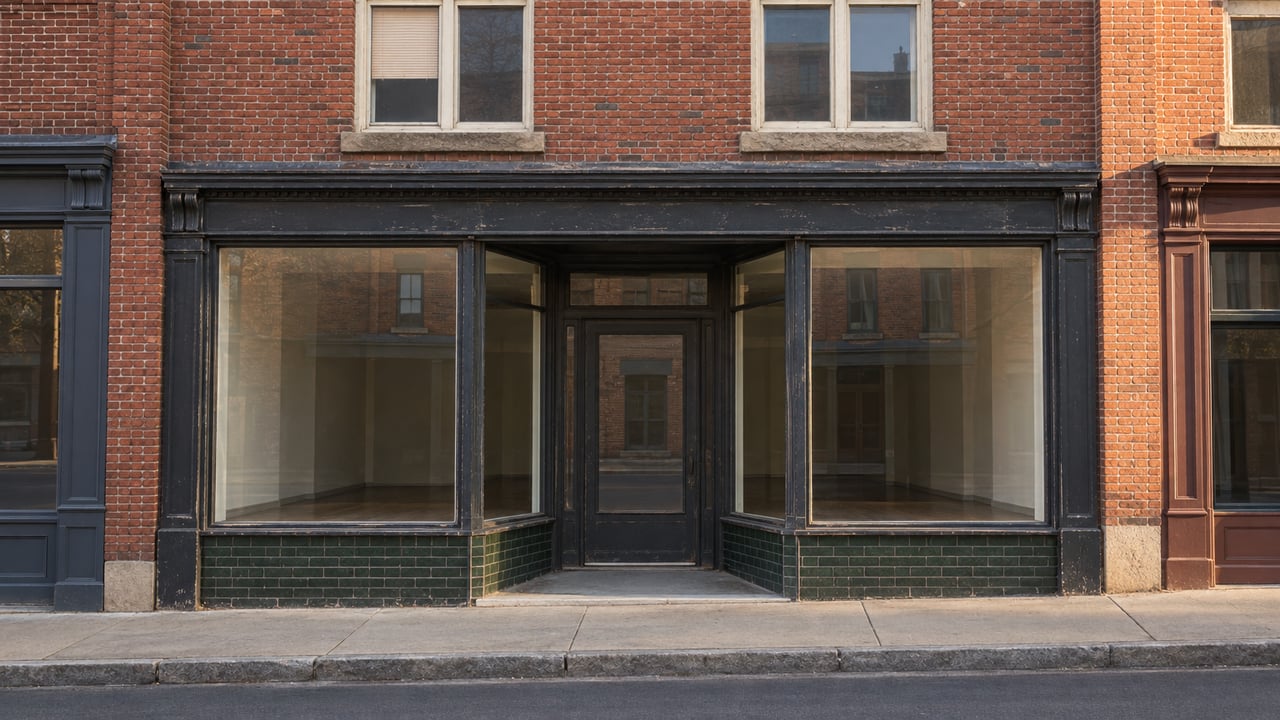
As PGH Pizza reported, for most of the summer, the surest way to get news out of Regent Square was to text a stranger who wrote about pizza. When Josh Sickels was first moving Rockaway Pizzeria onto South Braddock Avenue in early 2025, a local food writer kept getting unsolicited updates from neighbors who'd walked past the storefront that day. One reported the booths had arrived. Another had spotted a kitchen taking shape where a coffee bar used to be. A third just wanted to know if knocking on the window might get them a slice.
That same appetite for information came back this June, for a less happy reason. Sickels closed Rockaway after years of repetitive stress injuries in his back caught up with him, and he spent the summer focused on physical therapy instead of dough. The shop reopened on Braddock Avenue at noon on September 26, and Sickels thanked the neighborhood for checking in while he recovered from what turned out to be multiple herniated discs. If you live in Regent Square, you likely already knew most of this. What's worth sitting with is why a single pizza shop closing for three months became neighborhood news at all.
A Business District You Can Walk in Four Minutes
Regent Square's commercial strip isn't a district in the way that word usually gets used. It's a two-block run of South Braddock Avenue, narrow enough that a resident can walk from one end to the other in a few minutes, dog leash in hand, without breaking a sweat. There's no anchor grocery store pulling steady foot traffic, no big parking structure funneling shoppers in from elsewhere. What's there is a tight cluster of independently owned storefronts that residents can name in order, the way you'd list houses on your own street.
That scale changes what a single closure means. On a commercial strip with forty restaurants, losing one is a rounding error. On a two-block strip with a handful, losing one measurably shrinks what's available on a Tuesday night. Rockaway wasn't competing with a dozen other pizza places in walking distance. It was one of the few, sitting across the street from Sickels' other restaurant, Hemlock House, in a building that had briefly served coffee before it started serving pies. When that storefront went dark, there wasn't a comparable replacement two doors down to absorb the loss. There was just a gap, and neighbors noticing it every time they walked past.
What Happens When a Regent Square Business Actually Closes for Good
Rockaway's closure was temporary and personal, tied to one man's spine rather than his business. Regent Square has also lived through the other kind, a closure with no reopening date attached, and it's worth looking at what actually happened next because it wasn't what you'd expect from a dying storefront.
The Regent Square Theatre, a single-screen art house that had shown independent films on Braddock Avenue since 1936, closed for good in November 2019 when its owner, the Pittsburgh Center for Arts and Media, ran into financial trouble. It sat dark for over a year while people speculated about a revival. Nothing came of it. In 2021, the building was purchased not by a new tenant looking to reopen it as a theater, but by Concept Art Gallery, the business next door. The gallery folded the old theater into its own footprint, using the extra room for auction storage and new exhibition space, and kept the original marquee standing as a piece of the block's history rather than a functioning sign.
That's the pattern on a strip this size. A closure doesn't create an empty slot waiting for a stranger to fill it. It gets absorbed by whoever's already standing next door, because the neighbors are the ones with the relationship to the space and the motivation to keep the block whole. Rockaway's situation was different in nature, a medical leave rather than a business failure, but the same logic applied in miniature. There was no serious talk of another pizza shop moving into 1137 South Braddock while Sickels recovered. The neighborhood waited for the same owner to come back, the way you'd wait for a friend, not a vendor.
The Block Right Now
Walking South Braddock today, here's roughly what you'd pass, door to door:
- Hemlock House, Sickels' other restaurant, directly across from Rockaway
- D's Six Pack and Dogs, a longtime neighborhood stop for a quick bite
- Stay Gold Books, a new and used bookstore behind a pink storefront
- Urban Jungle, a plant and art shop that opened as a career-change project
- 3 Rivers Outdoor Co., which runs weekly trail runs and campfires tied to nearby Frick Park
- Concept Art Gallery, now spanning its original space and the former theater next door
- Biddle's Escape, one of the neighborhood's go-to coffee shops
None of these businesses is large. None of them needs to be, because the strip isn't built around volume. It's built around a small enough number of owners that most of them know each other, and know their customers by name.
The Storefronts That Didn't Wait for Permission
The newer additions to that list say something about how this particular strip fills in when a space does become permanently available, as opposed to temporarily closed for one owner's recovery.
Stay Gold Books opened in March 2024 in a South Braddock storefront that had sat empty since the pandemic. The owners, Corey and Carrie Wittig, are both former educators who'd lived nearby for years before deciding to open a shop. Carrie's breast cancer diagnosis in December 2020 pushed the couple to rethink how they wanted to spend their time, and they landed on a bookstore built around the same drop-in, informal-learning instinct Corey had brought to his work at the Carnegie Library. Corey Wittig described it plainly when the shop was still new: he and Carrie felt the neighborhood needed and would appreciate a shop like theirs, and they never considered opening it anywhere but Braddock Avenue.
Urban Jungle followed a similar path. Owner Dalene Stangl opened the plant and art shop as what she's called a retirement hobby after more than three decades in academia, filling a storefront across the street from Stay Gold with terrariums, photography, and sculpture from local makers. Neither business opened because a market study said Regent Square needed a bookstore or a plant shop. Both opened because someone who already loved the block wanted to be part of it, which is closer to how most of Braddock Avenue's roster has always come together.
That's the throughline connecting a shuttered movie theater in 2019, two new storefronts in 2024, and one pizza shop's medical leave in 2026. This isn't a business district that runs on turnover the way bigger commercial corridors do, with vacancies advertised to whichever chain or investor bids first. It runs on a small enough number of owners, most of them neighbors before they were proprietors, that the whole block feels the absence of any one of them and treats a reopening like a piece of actual news.
Rockaway's return on September 26 fits that pattern exactly. Sickels wasn't just unlocking a door. He was closing a three-month gap in a strip that only has so many doors to begin with.
If you're the kind of person who already tracks which storefront on Braddock Avenue just changed hands, you understand something about Regent Square that doesn't show up in a listing description. That knowledge is exactly what makes conversations about buying or selling here more useful when they start with someone who pays attention to the block, not just the comps. Miranda Micire works across Pittsburgh's East End neighborhoods, Regent Square included, and is always glad to talk through what a specific street or storefront actually means for day to day life here. Contact us when you're ready to talk about it.